
Social media has become one of the most powerful forces shaping modern life. What began as a simple way for friends and families to connect online has grown into a global system influencing how people communicate, learn, work, shop, campaign, entertain themselves, and even understand the world around them.
Across the globe, billions of people now live part of their daily lives through digital platforms. From childhood to adulthood, social media has become deeply embedded in human behaviour, public communication, business, politics, education, and personal identity. It offers enormous opportunities, but it also raises serious concerns about mental health, privacy, misinformation, addiction, and the quality of human relationships.
The story of social media began in the late 1990s and early 2000s, when online networking platforms first allowed users to create profiles, exchange messages, and share personal updates. As internet access expanded and smartphones became part of everyday life, social media moved from desktop computers into the hands of ordinary people everywhere. With features such as instant messaging, photo sharing, live streaming, short videos, and online communities, it quickly became one of the defining technologies of the 21st century.
For children, social media can be both a window to knowledge and a source of danger. On the positive side, young users can access educational videos, learning games, language tools, creative content, and interactive materials that support their development. It also enables children to stay connected with relatives and friends across distance.
However, early and uncontrolled exposure to social media can affect concentration, reduce physical activity, disturb sleep patterns, and expose children to inappropriate content. Children may also struggle to separate reliable information from harmful, false, or manipulative material. Without guidance from parents, teachers, and caregivers, social media can become less of a learning tool and more of a distraction.
For teenagers, the influence of social media is even more complex. Adolescence is a stage of identity formation, emotional development, and social discovery. Social media gives young people a platform to express themselves, explore interests, share talents, build friendships, and participate in wider conversations. Used positively, it can encourage creativity, confidence, collaboration, and digital skills.
At the same time, teenagers are especially vulnerable to the pressures of online life. Cyberbullying, peer pressure, body-image concerns, unrealistic comparisons, and the constant search for approval through likes and comments can have serious psychological effects. Many young people compare their real lives with carefully edited online images, leading to anxiety, low self-esteem, loneliness, and emotional stress. In this sense, social media does not only reflect teenage life; it can also shape how teenagers see themselves.
For adults, social media has transformed communication, business, and professional development. Entrepreneurs use it to promote products and services. Professionals use it to build networks and personal brands. Journalists, educators, activists, artists, and content creators rely on it to reach wider audiences. For many small businesses, social media has become a cost-effective gateway to local and international markets.
It has also expanded access to information and learning. Adults can follow news, join professional communities, attend virtual trainings, discover opportunities, and participate in public debate. In societies where traditional media may be limited or controlled, social media can provide alternative spaces for expression and civic engagement.
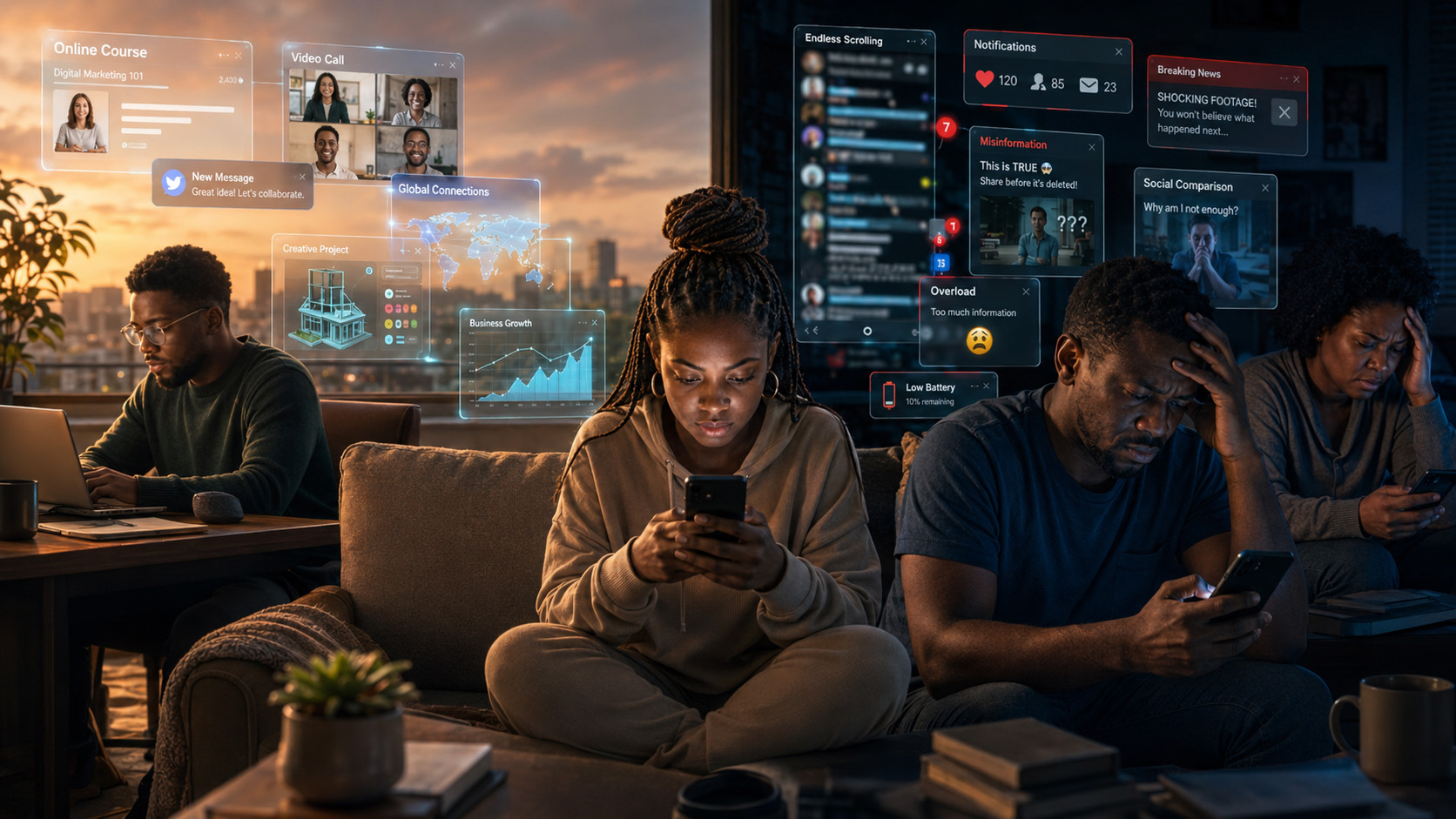
Yet the disadvantages are equally visible. Many adults now spend excessive hours scrolling through digital platforms, often at the expense of work, family life, rest, and real-world relationships. Constant exposure to bad news, arguments, misinformation, and online hostility can lead to mental fatigue and emotional exhaustion. The pressure to remain visible, responsive, and relevant online can also create a silent form of digital dependency.
Privacy is another major concern. Many users share personal information without fully understanding how their data may be collected, stored, analysed, or exploited. In an age where personal details, preferences, locations, and online behaviour can be tracked, social media has raised important questions about consent, security, and digital rights.
At the societal level, social media has become a powerful tool for both progress and disruption. It has amplified marginalized voices, supported social movements, exposed injustice, enabled emergency communication, and helped communities mobilize support during crises. Through social media, humanitarian campaigns, fundraising efforts, educational movements, and civic actions can reach audiences across borders within minutes.
However, the same speed that makes social media powerful also makes it dangerous. False information, hate speech, propaganda, and rumours can spread rapidly, influencing public opinion and sometimes creating real-world consequences. This makes digital literacy one of the most important skills of modern citizenship.
The true impact of social media, therefore, lies in how it is used, managed, and understood. It is neither purely good nor purely harmful. It is a tool, but a powerful one. In the hands of informed and responsible users, it can educate, connect, inspire, and empower. In the absence of discipline, guidance, and regulation, it can distract, divide, manipulate, and harm.
The challenge for modern society is not to reject social media, but to use it wisely. Parents must guide children. Schools must teach digital literacy. Governments must protect citizens’ rights. Technology companies must act responsibly. Users must develop self-control and critical thinking.
Social media should serve human development, not replace human connection. It should help people learn, communicate, and grow, not trap them in cycles of comparison, addiction, and misinformation. The goal must be balance: embracing the benefits of digital connection while protecting the dignity, health, and freedom of the human person.
In the end, social media is one of the great mirrors of our time. It reflects our creativity, curiosity, ambition, insecurity, and vulnerability. Whether it becomes a bridge to progress or a path to addiction depends on the choices we make individually and collectively.