

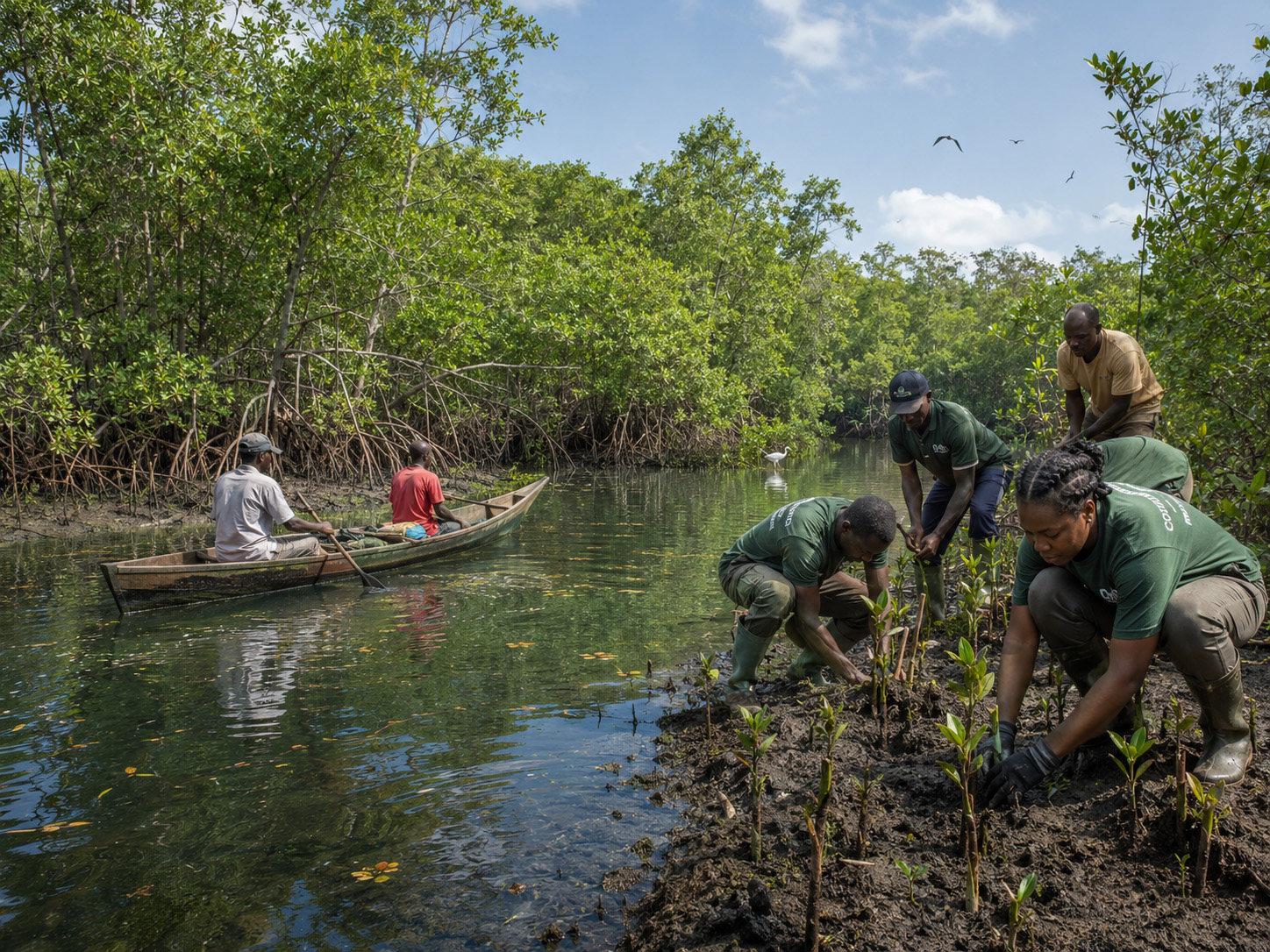
A Vital Resource for Nigeria, Africa, and the World
The Niger Delta is home to the largest mangrove forest ecosystem in Africa and one of the most extensive in the world. These unique coastal forests developed thousands of years ago along Nigeria’s Atlantic coastline, where freshwater from rivers meets saltwater from the ocean. Covering approximately 5,000 to 8,000 square kilometers, the mangrove forests stretch across the states of Bayelsa, Rivers, Delta, Akwa Ibom, Cross River, and Ondo. For centuries, local communities have depended on these forests for fishing, transportation, medicine, fuelwood, and cultural practices. Their historical significance makes them one of Nigeria’s most valuable natural resources.
The importance of mangrove conservation became more evident during the last five decades as industrialization, oil exploration, urban expansion, and environmental pollution threatened the ecosystem. Since the 1970s, environmental agencies, conservation organizations, and local communities have initiated efforts to restore and protect mangrove habitats. These conservation programs have focused on reforestation, pollution control, biodiversity protection, and sustainable resource management. The long-term duration of these efforts reflects the understanding that mangrove restoration is a gradual process that may take decades to fully recover damaged ecosystems.
For the Niger Delta, mangrove forests provide enormous environmental and economic benefits. They serve as breeding and nursery grounds for fish, crabs, shrimp, oysters, and numerous aquatic species that support local livelihoods. The forests act as natural barriers against coastal erosion, flooding, and storm surges, protecting vulnerable communities from environmental disasters. Mangroves also improve water quality by filtering pollutants and sediments, creating healthier aquatic ecosystems that support agriculture, fishing, and transportation activities throughout the region.
At the national level, mangrove conservation contributes significantly to Nigeria’s economy and environmental sustainability. Millions of Nigerians depend directly or indirectly on resources generated from the Niger Delta ecosystem. The fisheries industry benefits from healthy mangrove habitats, while industries that rely on aquatic resources also gain from their preservation. Furthermore, mangrove forests absorb and store large quantities of carbon dioxide, helping Nigeria reduce greenhouse gas emissions and support international climate change commitments. Their protection contributes to long-term economic growth and environmental resilience.
Across Africa, the Niger Delta serves as a model for coastal ecosystem conservation. Many African countries, including Senegal, Ghana, Cameroon, Mozambique, and Tanzania, possess mangrove ecosystems that face similar challenges. Conserving the Niger Delta mangroves strengthens regional biodiversity, protects migratory species, supports food security, and enhances climate adaptation efforts across the continent. As Africa continues to address environmental challenges, mangrove conservation offers practical solutions for balancing economic development with ecological sustainability.
Globally, mangrove forests are increasingly recognized as critical “blue carbon” ecosystems due to their exceptional ability to capture and store carbon from the atmosphere. Scientists estimate that mangroves can store up to four times more carbon per hectare than many terrestrial forests. Their preservation helps combat climate change, protect endangered species, and maintain healthy marine ecosystems worldwide. International organizations and climate funds have therefore prioritized mangrove restoration as a cost-effective strategy for achieving global environmental and sustainable development goals.
Despite these advantages, mangrove forests face numerous threats and disadvantages. Oil spills, illegal logging, dredging activities, industrial waste disposal, plastic pollution, and climate change continue to degrade large portions of the Niger Delta ecosystem. The destruction of mangroves leads to declining fish populations, loss of biodiversity, increased flooding, shoreline erosion, and reduced livelihoods for local communities. Weak environmental enforcement, inadequate funding, and unsustainable exploitation of natural resources remain major obstacles to effective conservation efforts.
From a security perspective, mangrove conservation plays a vital role in promoting environmental, economic, and social stability. Healthy ecosystems provide employment opportunities, strengthen food security, reduce poverty, and minimize conflicts over natural resources. Conservation projects can create jobs in restoration, ecotourism, fisheries management, and environmental monitoring. Looking ahead, stronger government policies, community participation, technological monitoring systems, and international partnerships will be essential for protecting the Niger Delta’s mangrove forests. Safeguarding this ecosystem is not only important for Nigeria but also for Africa and the world, ensuring environmental sustainability and prosperity for future generations.