

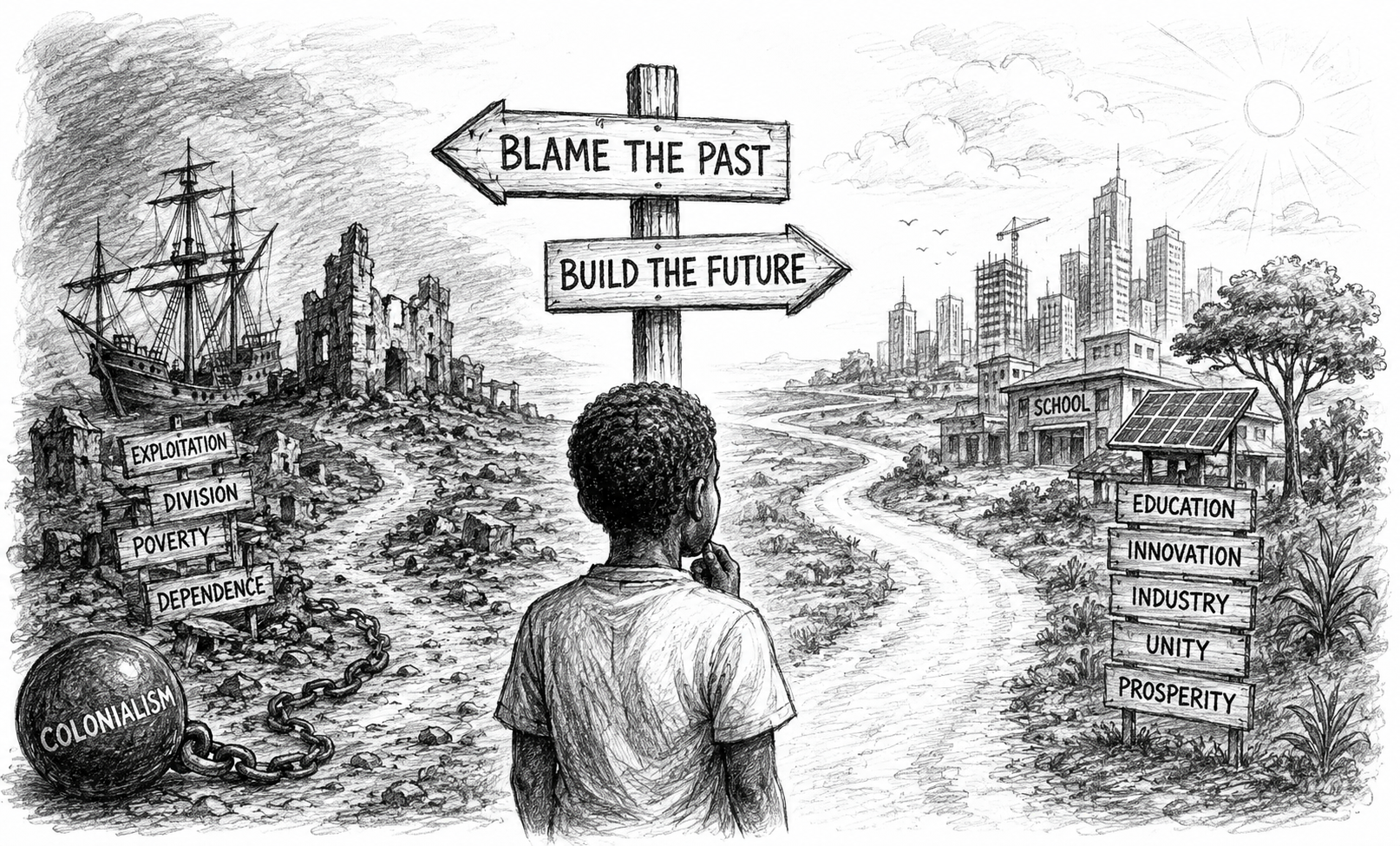
Colonialism left deep and lasting marks across both Africa and Asia. It reshaped economies, disrupted local institutions, redrew borders, altered systems of production, and imposed political structures that were often designed more for control than for development. Yet, after independence, the speed and trajectory of recovery have differed sharply between the two continents.
In Africa, countries such as Nigeria, Ghana, Kenya, the Democratic Republic of the Congo, and Algeria emerged from colonial rule with economies largely structured around the extraction and export of raw materials. Nigeria gained independence from Britain in 1960, Ghana in 1957, Kenya in 1963, the Democratic Republic of the Congo from Belgium in 1960, and Algeria from France in 1962. Before colonial rule, many African societies had active trade networks, sophisticated governance systems, agricultural productivity, and regional economies connected through commerce, culture, and diplomacy. Colonial rule disrupted many of these systems and replaced them with export driven economies tied closely to European industrial needs.
Asia also experienced colonial exploitation. India became independent from Britain in 1947, Malaysia in 1957, Singapore in 1965, South Korea emerged from Japanese occupation in 1945, and Vietnam gained independence from France in 1954. These countries also inherited damaged economies, social divisions, and political tensions. Yet several Asian countries recovered at remarkable speed and, over time, became global centres of manufacturing, technology, trade, and finance.
This contrast raises an important question: why did many Asian countries rebound faster, while many African countries remained in prolonged recovery?
One major difference lies in the nature of state building after independence. In several Asian countries, anti colonial movements were accompanied by strong nationalist ideologies, centralised political leadership, and clear developmental ambitions. Leaders such as Lee Kuan Yew in Singapore, Jawaharlal Nehru in India, and Park Chung Hee in South Korea viewed independence not merely as the end of foreign rule, but as the beginning of national reconstruction. Their countries pursued deliberate strategies around industrialisation, education, infrastructure, discipline, and institutional capacity.
In many African countries, however, colonial powers had left behind political systems that were often weak by design. Indirect rule, fragmented administration, limited local participation in high level governance, and ethnic or regional divisions shaped the transition to independence. In several cases, power was transferred quickly, without sufficient preparation for industrial planning, administrative continuity, national integration, or institutional development. The result was that independence sometimes arrived with political sovereignty but without the strong systems required to sustain economic transformation.
Economic strategy also played a decisive role. Several Asian countries deliberately moved from agrarian economies toward industrialisation. They invested in manufacturing, infrastructure, export industries, technical education, and human capital. South Korea, for example, transformed from a war damaged agrarian society into a leading industrial economy through long term planning, education, state support for industry, and disciplined national policy. Singapore, despite having limited natural resources, built its success around efficient governance, strategic location, human capital, logistics, finance, and global trade.
By contrast, many African economies remained heavily dependent on exporting raw materials such as oil, minerals, cocoa, copper, timber, and agricultural commodities. Colonial economies had been designed around extraction, and many post independence states retained this structure. This made national economies vulnerable to fluctuations in global commodity prices. When prices rose, revenues increased; when they fell, public finances weakened. Without strong industrial bases, many African countries continued to import finished goods, widening trade deficits and limiting job creation.
External influence also shaped post colonial development. Many African countries remained closely tied to former colonial powers through trade patterns, currency arrangements, aid relationships, debt structures, and diplomatic influence. This form of indirect dependency, often described as neocolonialism, continued to influence policy choices and economic direction. Foreign aid and loans have sometimes supported development, but when not matched with domestic capacity building, they can also reinforce dependency and limit national policy independence.
Still, colonialism alone cannot explain the full story. Internal governance failures have also played a major role in slowing development. Corruption, elite capture, weak institutions, short term planning, policy inconsistency, poor public accountability, and political instability have all contributed to Africa’s uneven progress. Colonialism created structural disadvantages, but post independence leadership decisions have either deepened or reduced those disadvantages.
It is also important to avoid presenting Africa as a continent without progress. Some African countries have made notable gains, proving that underdevelopment is not inevitable. Botswana, Mauritius, Rwanda, and others have shown that stronger institutions, focused policy, investment in people, and better governance can produce measurable transformation. Their experiences demonstrate that leadership, discipline, and institutional clarity matter.
Today, many African countries continue to face challenges rooted partly in colonial legacies. These include weak transport networks built primarily for extraction, border tensions created by arbitrary boundaries, overreliance on foreign technology, limited industrial capacity, food insecurity, fragile education systems, and inadequate infrastructure in power, logistics, healthcare, and digital connectivity. These obstacles continue to raise the cost of doing business, weaken productivity, and limit the ability of African economies to compete globally.
The path forward requires both psychological and structural change. Africa must acknowledge the damage of colonialism without becoming permanently trapped in the language of historical victimhood. Colonialism caused immense harm, but sustainable development requires agency, strategy, and disciplined implementation. The continent must move from merely explaining its problems to building durable solutions.
A practical long term development agenda for Africa should rest on five pillars.
The first is education reform. African countries must prioritise science, technology, engineering, mathematics, vocational training, research, innovation, and entrepreneurship. Education systems must move beyond certification and prepare young people for production, problem solving, and enterprise.
The second is industrialisation. Africa must process more of its raw materials locally before export. Cocoa should become chocolate and related products. Crude oil should support petrochemicals and local industries. Minerals should feed manufacturing value chains. Agricultural products should be processed, packaged, branded, and exported as finished goods.
The third is infrastructure. Electricity, rail, ports, roads, broadband, storage systems, and logistics networks are essential for competitiveness. Without reliable infrastructure, even the most talented entrepreneurs and skilled workers will struggle to build globally competitive enterprises.
The fourth is governance reform. Strong institutions, transparent procurement, rule of law, accountability, and anti corruption systems are necessary for sustainable development. Investors, citizens, and innovators need predictable systems, not arbitrary decisions.
The fifth is regional trade. Africa must fully implement and strengthen intra African trade. A continent of over a billion people should not remain dependent primarily on external markets. Stronger regional supply chains can create jobs, expand manufacturing, deepen markets, and reduce vulnerability to global shocks.
A 20 year development framework could proceed in phases. The first five years should focus on governance reforms, infrastructure planning, energy expansion, and institutional strengthening. Years six to ten should prioritise manufacturing, agro processing, skills development, and regional trade corridors. Years eleven to twenty should focus on technological innovation, export competitiveness, indigenous research capacity, and global market positioning.
Africa’s greatest resource is not its minerals, oil, forests, or land. Its greatest resource is its people, especially its young population. If properly educated, empowered, and connected to productive systems, Africa’s youth can become the engine of the continent’s transformation.
Asia’s rise demonstrates that colonial history does not permanently determine destiny. Recovery is possible when nations build institutions, invest in human capital, pursue industrial policy, protect strategic interests, and remain disciplined over time. Africa’s future will not be secured by waiting for rescue from former colonial powers or global institutions. It will be built by expanding productive capacity, strengthening governance, and making deliberate choices in favour of long term development.
The next chapter of African development will not be written by colonial history alone. It will be written by the courage, discipline, and vision of African nations today.