

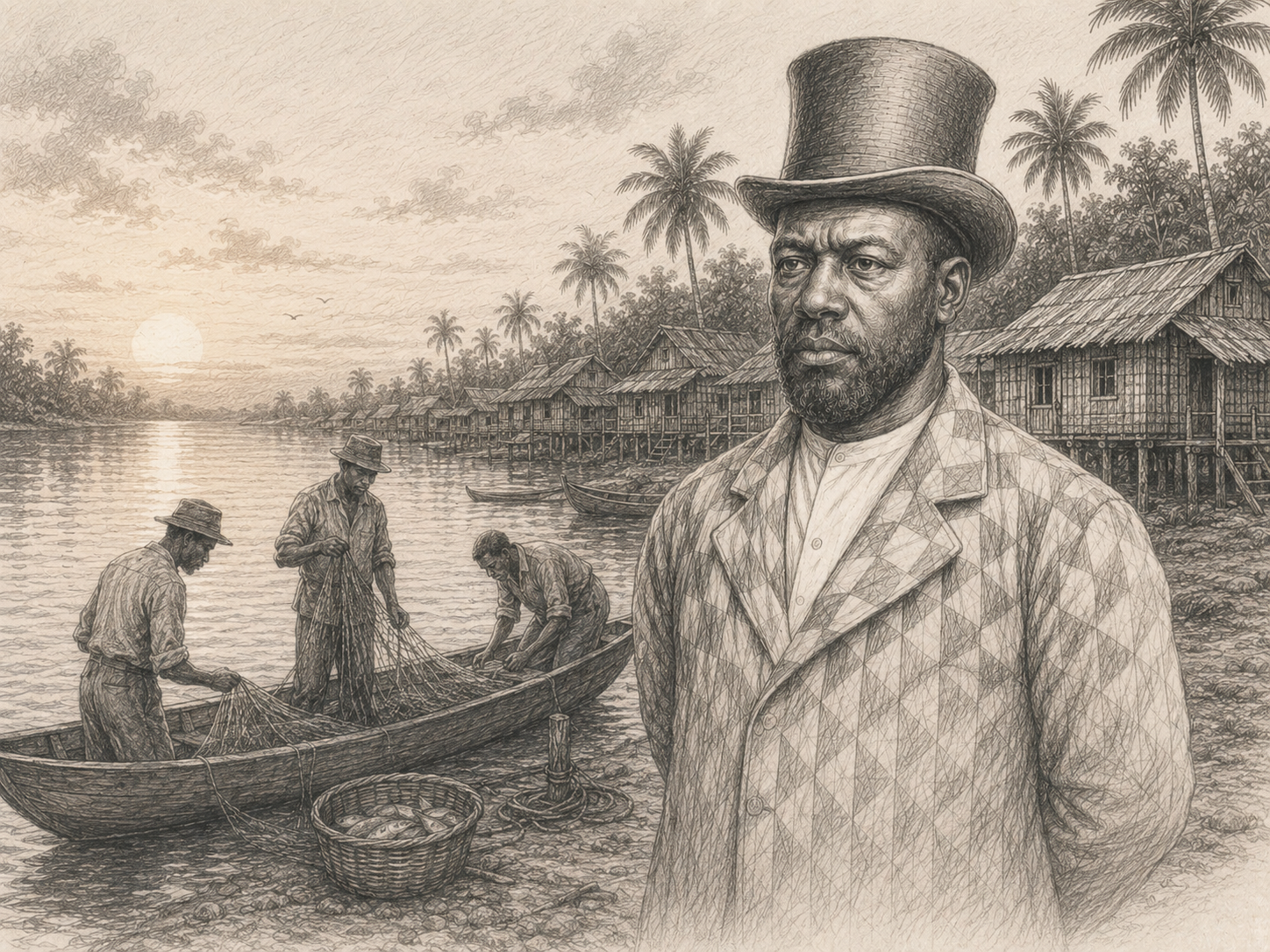
Few figures in Nigerian history command the kind of reverence, mystery, and historical weight carried by King Koko, the legendary ruler of the Nembe Kingdom. More than a traditional king, he was a defender of sovereignty, a strategist, a symbol of resistance, and a leader whose actions forced the world to pay attention to the Niger Delta.
At a time when colonial power was expanding aggressively across West Africa, King Koko stood at the centre of one of the most defining confrontations between indigenous authority and foreign economic domination. His story is not merely a Nembe story. It is a Nigerian story. It is an African story. It is the story of a people who refused to be reduced to spectators in their own land.
King Koko is best remembered for his resistance during the famous Akassa Raid, a moment that remains one of the boldest acts of defiance against colonial exploitation in the Niger Delta. To some colonial voices of the time, it was described as rebellion. But to the Nembe people, and to many who study the deeper meaning of that period, it was an act of sovereignty. It was a declaration that a people had the right to protect their economy, their dignity, their trade routes, and their future.
The conflict did not arise in isolation. It grew out of frustration with systems that sought to control local commerce, weaken indigenous authority, and place the wealth of the region in foreign hands. King Koko understood what was at stake. He saw that economic control was also political control. He recognised that if the Nembe people lost command over their trade and resources, they would also lose influence over their destiny.
His response shook the colonial establishment. The events that followed created debates far beyond the creeks of Nembe. They reached British political circles, exposed the harsh realities of colonial rule, and contributed to wider reconsiderations of imperial policy in the Niger territories. In that sense, King Koko’s resistance was not a forgotten local episode; it was part of the chain of events that shaped the political evolution of the region that would eventually become Nigeria.
This is why King Koko’s legacy remains powerful. He represents courage, but also foresight. He represents resistance, but also leadership. He represents tradition, but also political intelligence. His life reminds us that history is not only made in capitals and parliaments. Sometimes, history is made in riverine kingdoms, in trading communities, and by leaders who refuse to surrender the dignity of their people.
The return of King Koko’s Day is therefore more than a cultural celebration. It is a restoration of memory. It is a call to remember one of the most important figures in the history of the Niger Delta and to place his story where it belongs — at the centre of Nigeria’s national conversation.
The celebration brings together culture, heritage, education, dialogue, healthcare, youth engagement, and community development. It honours the past while also speaking to the present. Through thanksgiving, teachings on peace, regattas, workshops, film, awards, medical outreach, school competitions, town hall conversations, and traditional maritime displays, the event connects generations to the values King Koko embodied.
For the people of Nembe, the celebration is deeply personal. It is a moment of pride, identity, and remembrance. For Bayelsa State, it is an opportunity to showcase one of its greatest historical treasures. For Nigeria, it is a reminder that the nation’s story was shaped not only by colonial administrators and political elites, but also by indigenous leaders whose courage challenged injustice and defended their people.
King Koko’s Day is not just a festival. It is a cultural statement. It says that history must not be forgotten. It says that the Niger Delta has always been central to the story of Nigeria. It says that the sacrifices of past leaders must continue to inspire new conversations about justice, development, identity, and unity.
Today, King Koko’s name still carries power because his struggle remains relevant. Questions of resource control, economic fairness, cultural dignity, and political recognition continue to shape national discourse. His life reminds us that leadership is not only about authority; it is about standing firm when the future of a people is at risk.
As Bayelsa prepares to honour him in grand style, one message stands clear: King Koko’s legacy is alive. His courage still speaks. His story still teaches. His name still belongs in the headlines of Nigerian history.
King Koko was not simply a king of Nembe. He was a voice of resistance, a defender of dignity, and one of the bold figures whose actions helped shape the consciousness of a nation.