

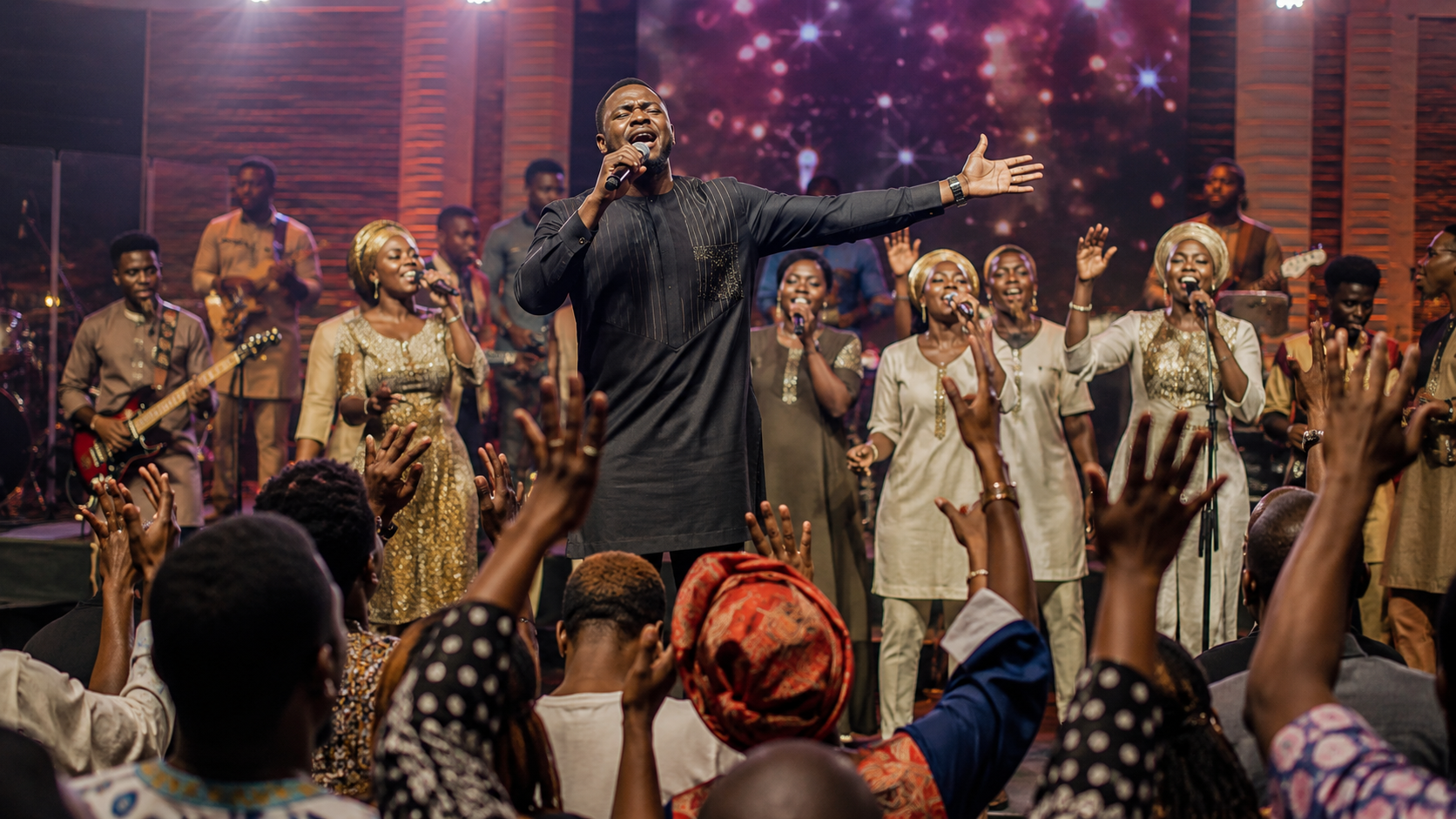
Nigerian gospel music is one of the most powerful expressions of faith, culture, and creativity in the country’s music landscape. Rooted in worship, testimony, praise, and spiritual encouragement, it has grown from church choirs and local crusades into a major musical movement with national and global reach.
For decades, gospel music in Nigeria has served more than an entertainment purpose. It has been a source of comfort, hope, identity, and moral reflection. From traditional praise songs rendered in Yoruba, Igbo, Hausa, Ijaw, Efik, Tiv, Edo, and other Nigerian languages, to contemporary worship, urban gospel, choir music, and gospel-pop, the genre reflects the country’s deep religious life and rich cultural diversity.
The foundation of Nigerian gospel music was built in churches, prayer meetings, revivals, and family worship spaces. Early gospel singers used local rhythms, call-and-response patterns, traditional instruments, and indigenous languages to connect deeply with worshippers. Over time, the sound expanded, blending highlife, soul, R&B, reggae, hip-hop, Afrobeats, and classical choral arrangements.
Artists such as Panam Percy Paul, Bola Are, Tope Alabi, Buchi, Lara George, Sammie Okposo, Sinach, Frank Edwards, Nathaniel Bassey, Mercy Chinwo, Dunsin Oyekan, Moses Bliss, Tim Godfrey, Eben, Ada Ehi, Joe Praize, and many others have shaped the modern gospel scene in different ways. Some are known for deep worship, others for praise, inspirational songs, choir-led performances, or gospel sounds that connect with younger audiences.
One of the major strengths of Nigerian gospel music is its emotional depth. The songs often speak directly to everyday experiences — hardship, gratitude, healing, faith, victory, waiting, loss, and hope. This is why gospel music resonates across class, age, language, and geography. It gives people words for their prayers and melodies for their faith.
In recent years, Nigerian gospel music has also gained strong international visibility. Songs by Nigerian gospel artists are now sung in churches across Africa, Europe, North America, and beyond. Digital platforms, live worship sessions, YouTube, streaming services, and social media have helped carry Nigerian gospel beyond national borders. A worship song recorded in Lagos, Port Harcourt, Abuja, or Ibadan can now reach congregations across the world within hours.
The global success of Nigerian gospel also reflects the influence of the Nigerian diaspora. Churches and Christian communities abroad have become important platforms for spreading the sound. Through concerts, worship conferences, church networks, and online ministries, Nigerian gospel artists have built audiences far beyond Nigeria.
Like Afrobeats, Nigerian gospel has become part of the country’s cultural export. But unlike mainstream pop, its primary power lies in spiritual connection. It is music that people do not only listen to; they use it to pray, worship, reflect, and endure.
The industry has also become more professional. Gospel artists now work with producers, managers, video directors, promoters, digital distributors, and media teams. Concerts and worship events attract large audiences, while gospel music videos and live recordings draw millions of online views.
Still, the sector faces challenges. Many gospel musicians struggle with funding, distribution, copyright protection, and limited institutional support. There is also the delicate balance between ministry and business — between preserving the spiritual purpose of gospel music and building a sustainable creative industry around it.
Despite these challenges, Nigerian gospel music continues to thrive because it speaks to something deeply human: the need for hope. In a country where many people face economic pressure, uncertainty, and social challenges, gospel music remains a voice of encouragement and strength.
Nigerian gospel music is therefore more than a genre. It is a spiritual archive, a cultural force, and a global sound of faith. It carries the prayers of a people, the beauty of their languages, and the resilience of their belief.
From church altars to international stages, Nigerian gospel music continues to rise — reminding the world that faith, when carried by sound, can travel farther than borders.