

African football has often been viewed as a supporting force on the global stage, despite the continent’s vast population, rich talent pool, and deep passion for the game. However, the challenges facing African football go beyond numbers. For decades, the continent has continued to grow in areas such as infrastructure, investment, organisation, and income generation — all of which are essential in modern football.
Football today is not only a sport; it is also a business. Its growth depends on strong financial investment, professional management, quality facilities, competitive leagues, and long-term planning. While Africa has a huge market and an unmatched love for the game, the continent is still developing economically, and football has not always received the level of structured investment seen in Europe and the Americas. These regions have built strong sporting systems because they have prioritised infrastructure, commercial development, and institutional support over many decades.
Africa’s journey at the FIFA World Cup began in 1970, when Morocco became the continent’s sole representative at the tournament. Since then, African participation has grown steadily, reflecting the continent’s increasing influence in world football.
African Representation at the FIFA World Cup
| Era | Number of African Teams |
|---|---|
| 1930–1966 | 0 |
| 1970–1978 | 1 |
| 1982 | 2 |
| 1986–1994 | 3 |
| 1998–2022 | 5 |
A major milestone came in 2010, when South Africa hosted the first FIFA World Cup on African soil. The tournament was more than a sporting event; it was a powerful statement about Africa’s capacity, ambition, and readiness to host the world. It showcased the continent’s infrastructure, culture, hospitality, and organisational strength.
Over the years, African footballers have also become some of the most influential figures in global football. They have broken records, won major trophies, led top European clubs, and inspired millions across the world. From George Weah’s historic Ballon d’Or triumph to the global impact of modern African stars, the continent’s footballing excellence is no longer in doubt.
Another important development is the growing number of players born in Europe and the Americas who are choosing to represent their ancestral African nations. This trend reflects a stronger emotional, cultural, and sporting connection to the continent. It also strengthens African national teams by expanding the talent pool available to them.
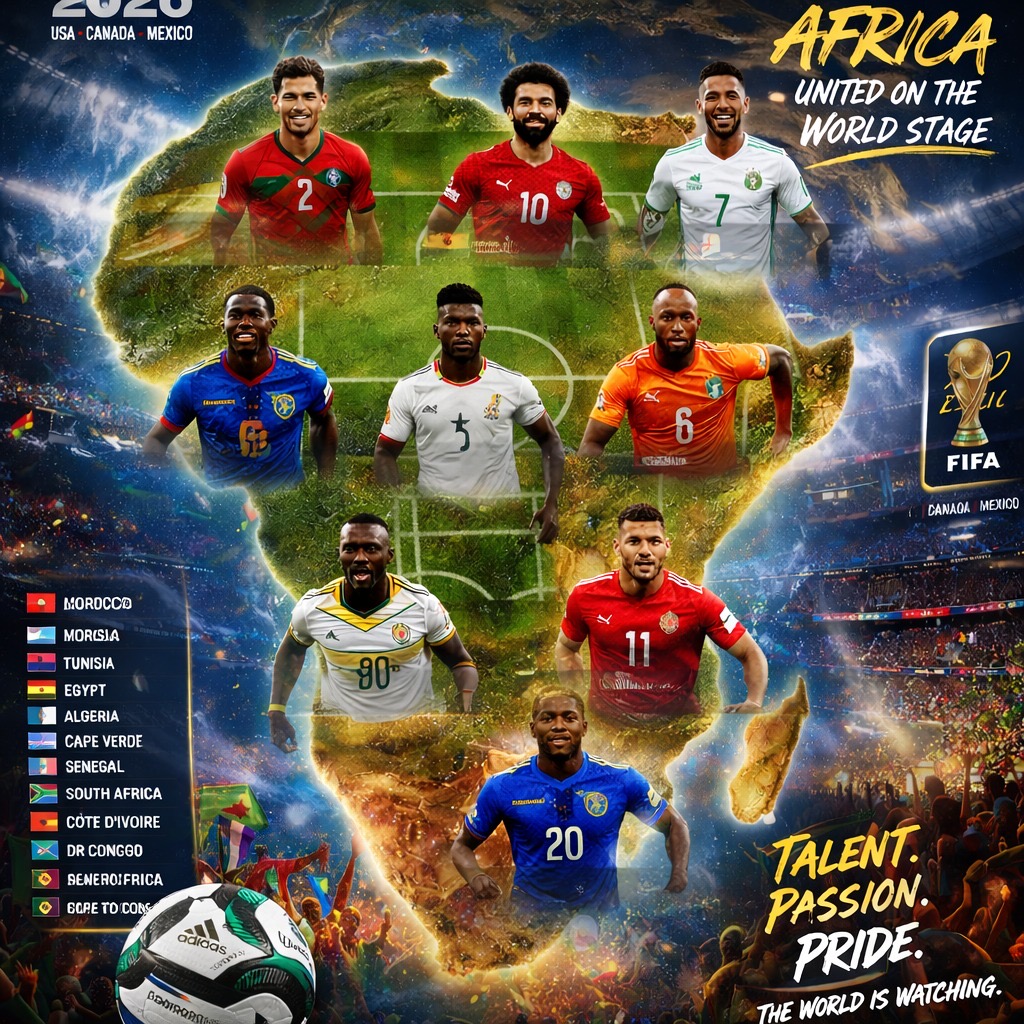
The expanded 2026 FIFA World Cup marks another historic moment for African football. For the first time, Africa is expected to have 10 representatives at the tournament, giving the continent its largest-ever presence on football’s biggest stage.
FIFA World Cup 2026 – Continental Representation
| Continent | Number of Teams |
|---|---|
| Europe | 16 |
| Africa | 10 |
| Asia | 9 |
| North & Central America | 6 |
| South America | 6 |
| Oceania | 1 |
This expansion is significant. It gives more African nations the opportunity to compete, gain experience, attract investment, and showcase their players to the world. It also increases the possibility of an African team going deeper in the tournament than ever before.
Africa has already proven that it can compete at the highest level. African nations have won Olympic gold medals in football, and at the 2022 FIFA World Cup, Morocco made history by becoming the first African country to reach the semi-finals. That achievement changed global perceptions and strengthened the belief that an African nation can one day win the World Cup.
Although no African country has yet been crowned world champion, the progress is clear. The talent exists. The passion exists. The ambition exists. What is needed now is continued investment, better structures, stronger domestic leagues, improved youth development, and consistent support from governments, federations, private investors, and the football community.
This brings us to a bold but realistic assertion: 2026 is a landmark year for African football. As the tournament approaches, Africans across the continent and in the diaspora will watch with hope, pride, and belief. The dream of seeing an African nation lift the FIFA World Cup trophy may still be ahead but it now feels closer than ever.