

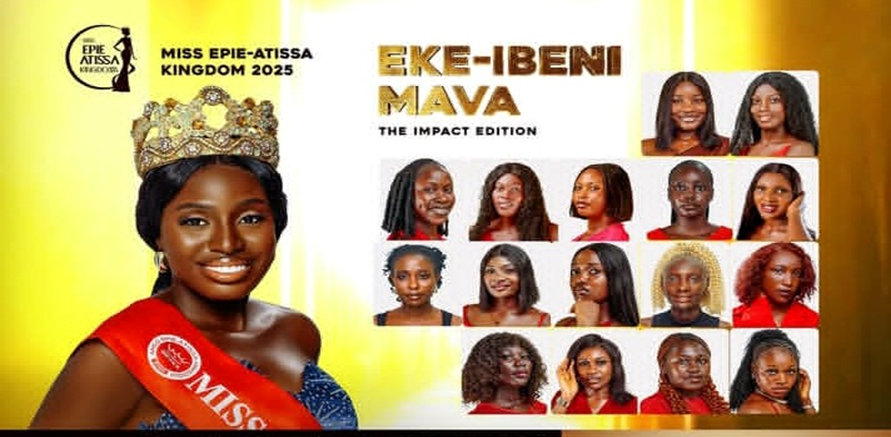
What better way to express the beauty of a culture than through its people, its language, its women, and the stories they carry?
The Banquet Hall in Yenagoa came alive with colour, elegance, and tradition as the much-anticipated Miss Epie Atissa Kingdom (MEAK) pageant took centre stage. More than a beauty contest, the event became a powerful celebration of Epie-Atissa identity, bringing culture, community, language, and womanhood into one unforgettable evening.
At the heart of the celebration was Mr. Inimeya T. Isaiah, whose vision for MEAK continues to present the Epie-Atissa culture in a fresh, dignified, and relatable way. Through the grace and confidence of young women drawn from different Epie communities, the pageant offered a beautiful reminder that culture is not only preserved in history books; it is kept alive through expression, language, fashion, music, dance, and shared pride.
A Night of Grace and Cultural Pageantry
The evening opened with a captivating dance performance by all ten contestants, who moved onto the stage in a choreographed presentation titled “Touch of Continuity.” The performance was fluid, elegant, and deeply symbolic. It spoke to the continuity of Epie traditions — a culture that lives, grows, and finds new meaning through every generation.
The pageant was designed to unite Epie communities on one stage and before one audience, creating a shared atmosphere of support, pride, and celebration. Ten communities were represented by contestants who carried themselves with grace, confidence, and cultural poise:
- Ovom — Miss Adulphus Precious
- Famgbe — Miss Nefigha Permanent Clifford
- Azikoro — Miss Sylvester Josephine
- Akenfa — Miss Canus Success Progress
- Akaba — Miss Ibubu Jessica Onini
- Agudama-Epie — Miss Matthew Omininize
- Biogbolo — Miss Rufus Sarah
- Yenagoa — Miss Isaac Faustina
- Yenebebeli I — Miss Tommy Kandi Ogilizibe
- Yenebebeli II — Miss Sunday Eredeme Esther
Their opening performance set the tone for a night filled with music, cultural displays, speeches, recognition, and moments of deep community pride.
A Vision Rooted in Experience
For Mr. Inimeya, the host and convener of the evening, MEAK is more than an event. It is a mission born out of personal experience.
In a moving address, he reflected on his school days as a dancer, recalling how he encountered bias and misconceptions about the Epie-Atissa people. Rather than allow those experiences to define him negatively, they gave him a purpose: to create a platform that tells a better story about his people.
That vision has become Miss Epie Atissa Kingdom — a pageant built to project pride, unity, cultural beauty, and positive representation. Inimeya also used the moment to appreciate his dedicated team, whose hard work behind the scenes has helped sustain every edition of MEAK.
Special recognition was also given to Dr. Steve Azaiki, whose support has remained instrumental to the success of the pageant, particularly through the generous provision of a venue for auditions over the years.
Beauty, Language, and Identity
One of the most striking moments of the night came when the contestants returned to the stage for their second appearance. This time, it was not only about beauty, confidence, or elegant attire. Each contestant introduced herself in the Epie language and described her outfit in her mother tongue.
It was a powerful reminder that true cultural beauty goes beyond appearance. It is found in language, identity, memory, and the confidence to stand proudly in one’s heritage.
The judges, Robert Derek Ukesiya and Zimokpoemi Okoya Ogoniba, assessed the contestants not only on presentation and poise, but also on their fluency in Epie and the authenticity with which they carried their cultural identity.
Honouring Epie Excellence
The evening also celebrated individuals from Epie-Atissa whose work continues to project excellence, creativity, entrepreneurship, and service. These recognitions reinforced the broader purpose of MEAK: to honour not only beauty, but also achievement and contribution within the community.
Among those honoured was Mrs. Kinime Igbokwe, popularly known in fashion circles as La Kimmy, founder of LaKimmy Fashion House. A couture visionary, she has built a brand that blends tradition with modern elegance, creating designs that are timeless, stylish, and rooted in heritage.
John Prosper, founder of Paradise Beauty Salon, was also recognised for his entrepreneurial drive and contribution to beauty, music, and creative enterprise. His work reflects the growing influence of Epie talent in the creative sector.
The spotlight also fell on Madam Helen Ovieteme Lott, a presenter and businesswoman whose voice, enterprise, and community spirit continue to inspire many.
Also honoured was High Chief Osomkime Edwin Blankso, a respected lawyer, philanthropist, and Chief Executive Officer of Olby Group of Companies from the Famgbe community. His recognition highlighted the strength of Epie human capital and the remarkable impact Epie people continue to make in different spheres of society.
These awards served as a reminder that the greatness of a people is reflected not only in their history, but also in the achievements of those who continue to carry the culture forward.
Contestant Awards and the Crown
The night also featured special contestant awards, adding excitement and friendly competition to the pageant. Each award highlighted a unique quality displayed during the contest:
- Most Intelligent — Miss Famgbe, Nefigha Permanent Clifford
- Best Behaved — Miss Azikoro, Sylvester Josephine
- Most Photogenic — Miss Azikoro, Sylvester Josephine
- Fan’s Favourite — Miss Akenfa, Canus Success Progress
The most anticipated moment of the evening came with the final crowning. After a night of beauty, confidence, language, and cultural expression, Miss Famgbe, Nefigha Permanent Clifford, emerged as the winner and was crowned Miss Epie Atissa Kingdom.
She was followed by Miss Agudama-Epie, Matthew Omininize, as first runner-up, while Miss Akenfa, Canus Success Progress, emerged as second runner-up.
More Than a Pageant
Miss Epie Atissa Kingdom is more than a pageant. It is a cultural movement. It is a platform for preserving language, celebrating womanhood, promoting unity, and reshaping the narrative around Epie-Atissa identity.
By bringing communities together, honouring achievers, showcasing young women, and placing the Epie language at the centre of public celebration, MEAK continues to prove that culture is not static. It is alive. It is expressive. It is beautiful. And when given the right platform, it can inspire pride across generations.
The event was not merely a night of crowns and applause. It was a statement: the Epie-Atissa culture is rich, dignified, and worthy of celebration.