

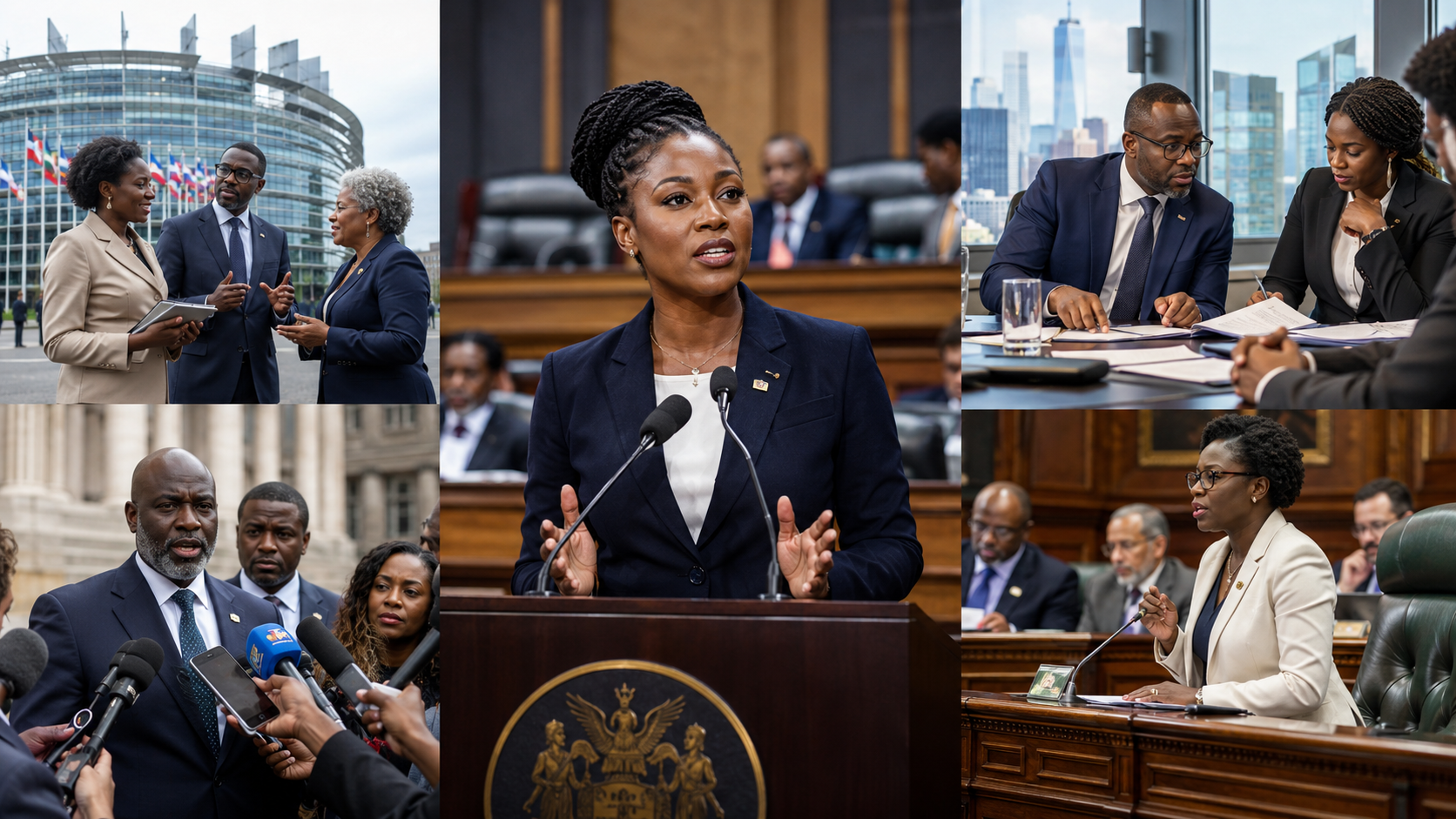
The growing presence of Africans and people of African descent in political offices across North America and Europe reflects an important shift in global governance. It tells a story of migration, integration, identity, and representation. From the post-independence movements of the late 1950s to the oil-boom years of the 1970s and 1980s, many Africans left the continent in search of education, opportunity, and stability. In more recent decades, however, migration has increasingly been shaped by economic hardship, political uncertainty, and the search for better living conditions.
Over time, these African communities have become deeply rooted in their adopted countries. Many are now second- and third-generation citizens who are not only contributing to society but also shaping public policy. Their rise in politics shows that governance in developed democracies is becoming more diverse and more reflective of the communities it serves. It also highlights the importance of inclusive leadership — leadership that brings different histories, cultural experiences, and social realities into decision-making.
One of the most visible examples is Ilhan Omar, a Somali-born American politician who made history as one of the first Muslim women elected to the United States Congress. Her personal journey as a refugee, immigrant, Muslim woman, and African-born public servant has strongly influenced her political voice. Omar has become known for her advocacy on immigration, healthcare, education, racial justice, and social equity. Her work reflects the concerns of many immigrant and minority communities who seek fairer representation and more inclusive policies.
Omar’s story demonstrates how identity can shape political commitment. Her background gives her a direct understanding of the struggles faced by refugees, immigrants, and working families. This has made her a powerful voice for communities that are often underrepresented in mainstream politics. Through her public service, she has shown how African diaspora leaders can transform personal experience into policy advocacy.
Another example is Adeoye “Oye” Owolewa, a Nigerian-American elected as the United States Shadow Representative for the District of Columbia. His political work focuses strongly on D.C. statehood, healthcare, education, racial equality, and fair representation. His Nigerian heritage and immigrant background give him a broad perspective on justice, democracy, and community development.
Owolewa’s advocacy for D.C. statehood reflects a larger struggle for political inclusion. For him, representation is not simply a constitutional issue; it is also a matter of dignity and equal citizenship. His work highlights how African diaspora politicians often connect local issues with wider questions of fairness, access, and democratic participation.
In the legal field, Carolyn Uchenna Okere has also made a significant mark. Elected to the Hamilton County Municipal Court in Ohio, she represents a growing generation of African diaspora professionals entering positions of public trust. Her Nigerian roots and commitment to justice have shaped her approach to public service, particularly in relation to fairness, access to justice, and the protection of vulnerable communities.
Judge Okere’s career reflects the importance of diversity within the judiciary. Courts are more trusted when they reflect the societies they serve. Her presence on the bench is therefore not only a personal achievement but also a symbol of progress for African and immigrant communities seeking greater visibility in legal and civic institutions.
In the United Kingdom, Kemi Badenoch, who was born to Nigerian parents, has risen to become one of the most prominent politicians of African descent in British public life. Since entering Parliament, she has held various ministerial roles and has become known for her conservative political views. Her rise reflects the increasing presence of African heritage leaders within major political parties and national institutions.
Badenoch’s career shows that African diaspora politicians are not limited to one ideological space. They can be found across the political spectrum, shaping debates on business, trade, education, technology, equality, and national development. Her public role also demonstrates how heritage, experience, and political philosophy can intersect in different ways.
The rise of these figures points to a broader truth: the African diaspora is no longer only a community of migrants and professionals; it is now a political force. Africans abroad are increasingly participating in elections, influencing public debate, leading institutions, and shaping the future of their countries of residence.
This growing visibility matters. Representation helps communities feel seen. It brings new perspectives into public policy. It also challenges old assumptions about who belongs in leadership. When people of African descent occupy political and legal offices, they expand the meaning of citizenship and strengthen democracy through diversity.
For Africa, this trend also carries significance. Diaspora politicians can serve as bridges between Africa and the wider world. Their influence can support stronger international partnerships, encourage investment, promote cultural understanding, and deepen conversations around migration, development, justice, and global cooperation.
The rise of Africans in Western political offices is therefore more than a story of individual success. It is a story of communities becoming visible, voices becoming influential, and identities finding space within the highest levels of governance. It is a reminder that migration does not end with settlement; it can also lead to leadership, representation, and lasting political impact.