
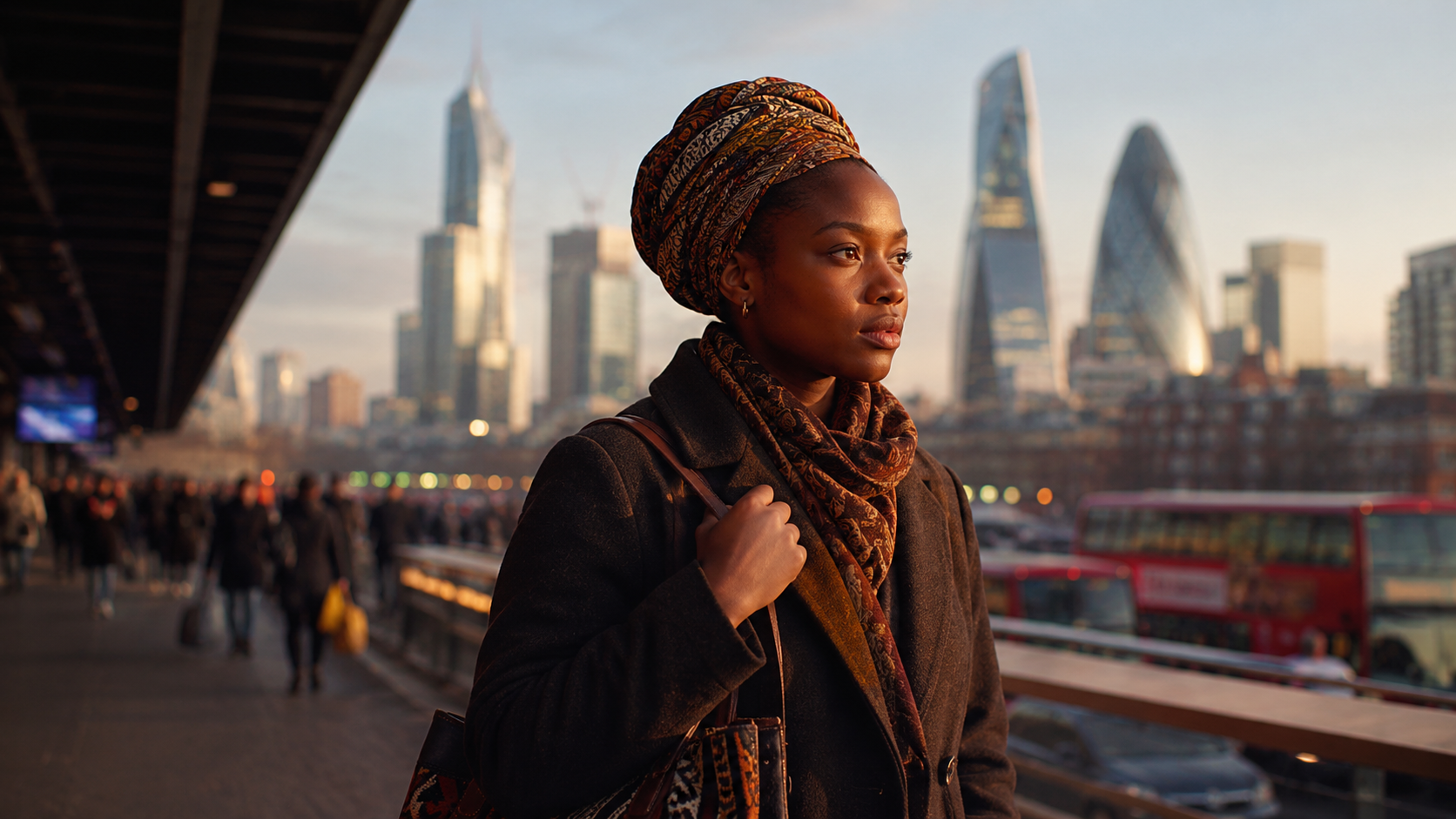
Globalization has made the world more connected than ever before. People move across borders for education, work, safety, opportunity, and survival. In the process, old ideas of “home” and fixed identity are being challenged. For many people in the diaspora, home is no longer just one place. It can be the country of birth, the land of ancestry, the place of settlement, or even a memory carried through language, food, family, music, and tradition.
This is why the diasporic experience is so complex. It is not simply about leaving one country for another. It is about learning to live between cultures, to belong to more than one world, and sometimes to feel fully at home in none. Identity becomes a journey rather than a fixed destination.
To understand this, we must first ask a simple but powerful question: what will you leave behind?
For migrants and their children, the answer is rarely straightforward. People may leave behind land, family homes, familiar streets, childhood friends, local languages, community life, and cultural rhythms. Yet they do not leave everything behind. They carry memories, values, beliefs, names, accents, stories, religious practices, family expectations, and inherited ideas of who they are.
Identity is the combination of experiences, values, histories, relationships, and cultural influences that shape a person’s sense of self. For those in the diaspora, that sense of self is often formed across borders. A person can be Nigerian and British, Somali and American, Sudanese and Scottish, Jamaican and English, Igbo and global, African and Western — all at once.
This is what makes diaspora identity powerful, but also difficult.
Cultural theorist Homi K. Bhabha describes this experience as a “third space” — a place between the culture of origin and the culture of settlement. In this space, people do not simply abandon one identity and adopt another. Instead, they create new, hybrid identities. These identities may combine language, dress, food, religion, worldview, and social habits from different places.
But this in-between life can also produce dislocation. Diasporic individuals often find themselves constantly explaining who they are. They may be seen as too foreign in their country of residence and too changed when they return to their ancestral homeland. This tension creates a lifelong negotiation of belonging.
The United Nations estimated that there were about 281 million international migrants worldwide in 2020, a number that reflects how deeply movement has become part of modern human life. Migration is not new. Humanity has always moved in search of safety, food, trade, knowledge, and opportunity. What is different today is the speed, scale, and visibility of movement.
As people move, identities move with them.
The idea of “home” becomes one of the most emotional questions in the diasporic experience. For some, home is where they were born. For others, it is where their parents or grandparents came from. For others still, home is where they have built a life, raised children, paid taxes, formed friendships, and created new memories.
Yet home can also become complicated. A migrant may spend years longing for the homeland, only to return and feel like a stranger. The place they remembered may have changed. The people may have changed. Even the migrant may have changed. The old emotional connection may remain, but the sense of everyday belonging may no longer feel natural.
This is what sociologist Avtar Brah describes through the idea of “homing desire” — the longing for a place of emotional belonging. But that place may not always be physically available. Sometimes the homeland exists more powerfully in memory than in reality.
Leila Aboulela captures this feeling in her writing when she describes the experience of being suspended between worlds — not fully here, not fully there. It is a familiar feeling for many people in the diaspora: to love more than one place, but not be completely claimed by any.
For Africans in Europe and North America, this can be especially layered. Many African societies are deeply communal. Family, extended relations, religious communities, village networks, and shared responsibilities often shape daily life. But in many Western societies, individualism is more dominant. Privacy, independence, and personal choice are often valued above communal obligation.
This difference can create emotional tension. A migrant may miss the warmth of family networks, but also grow accustomed to the independence of their new society. Over time, returning “home” may bring joy, but also discomfort. Expectations may feel heavy. Familiar customs may feel unfamiliar. The person may begin to wonder: where do I truly belong?
For many in the diaspora, the answer is not one place. It is many places.
Chimamanda Ngozi Adichie has often spoken about holding multiple identities without reducing herself to one. She is Igbo, Nigerian, African, and a citizen of the world. This layered understanding of self reflects the reality of many diasporic people. Identity does not have to be a competition between parts of oneself. It can be a collection.
Still, carrying multiple identities can come with pressure. In majority-white spaces, people of African descent may feel they are expected to represent an entire race, continent, religion, or culture. Zadie Smith has written about the burden of being “the only one” in certain spaces — the only Black person, the only immigrant child, the only person asked to explain a whole community.
This burden can be exhausting. It means the diasporic individual is not only living their own life but is often made to carry the weight of other people’s assumptions.
Yet the diaspora is not only a place of loss or confusion. It is also a space of creativity. It produces new music, literature, fashion, language, food, politics, and ways of thinking. Diasporic people often become cultural bridges, connecting societies that might otherwise misunderstand one another.
Anthropologist Arjun Appadurai describes the diaspora as a space where imagination is freed from narrow boundaries. In other words, migration can allow people to imagine new possibilities for identity and belonging. A person does not have to choose between “here” and “there.” They can create something new from both.
Paul Gilroy also argues that diaspora can challenge fixed ideas of nation, race, and culture. Diasporic life shows that identity is not always rooted in one territory or one national story. It can be shaped by movement, memory, struggle, creativity, and connection.
This is why diasporic art, literature, music, and cultural production are so powerful. They often speak in mixed languages, mixed rhythms, and mixed memories. They challenge simple categories. They remind the world that people are not single stories.
At the same time, globalization raises important questions. If the world becomes more connected, will cultures become too similar? Will local identities weaken? Will traditions disappear? Or will people find new ways to preserve heritage while participating in a wider global society?
The answer may depend on how individuals and communities respond.
Tradition should not become a prison, but neither should it be abandoned carelessly. Heritage can provide grounding, memory, dignity, and continuity. It can help diasporic individuals understand where they come from, even as they build lives elsewhere. But heritage must also be allowed to breathe. It must adapt, speak to new realities, and make space for younger generations who live between worlds.
This is where the diasporic individual becomes a model for the future. To live in the diaspora is to negotiate tradition and modernity, memory and movement, belonging and difference. It is to ask difficult questions: What should I preserve? What should I release? What do I owe the place I came from? What do I owe the place I now call home? What will I pass on to my children?
In a rapidly changing world, identity will not disappear. It will become more layered. People will continue to belong to nations, ethnic groups, religions, languages, and cultures. But they will also belong to networks, cities, professions, digital communities, and global movements.
The challenge is not to erase difference in the name of globalization. The challenge is to create societies where multiple identities can coexist without fear.
The diasporic experience offers a powerful lesson: home is not always a fixed location. Sometimes home is a relationship. Sometimes it is a language. Sometimes it is a memory. Sometimes it is a future being built in a new land. Sometimes it is the courage to carry many worlds within oneself.
So, what will you leave behind?, Perhaps the deeper question is: what will you carry forward?
For the diaspora, the answer may be this: carry the memory, but do not be trapped by it. Carry the culture, but allow it to grow. Carry the language, the stories, the food, the names, the values, and the dignity of origin. But also carry the confidence to become something new.
In the end, the diasporic journey is not only about displacement. It is about transformation. It is about redefining belonging in a world where borders still matter, but human lives increasingly cross them. It is about learning that identity is not weakened by multiplicity. It is enriched by it.
And perhaps that is the greatest gift of the diaspora: the ability to show the world that one can belong to many places, carry many histories, and still remain whole.