

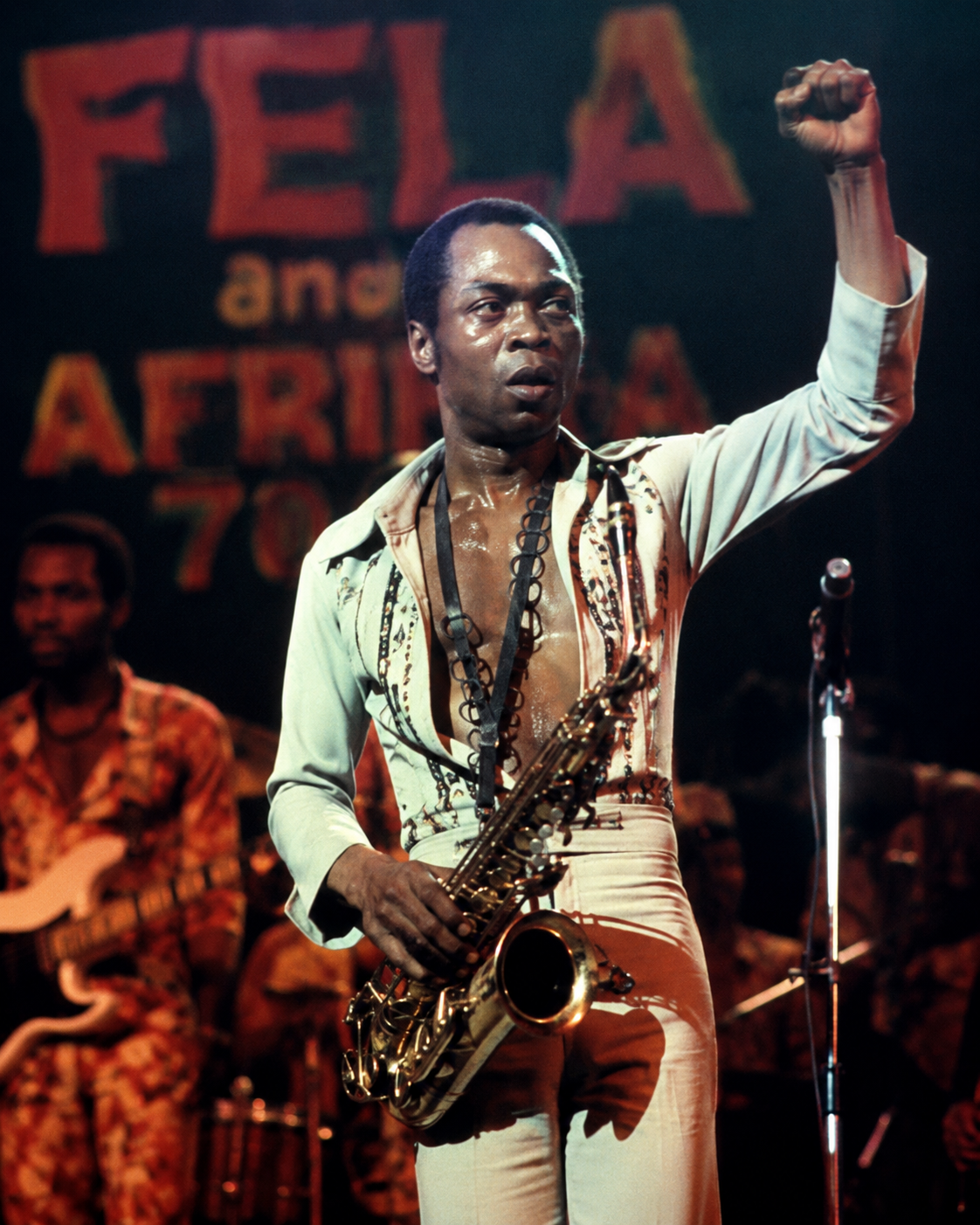
No story of Nigerian music can be complete without Fela Anikulapo-Kuti. More than a musician, Fela was a movement, a rebel voice, a cultural force, and one of Africa’s most influential artistic figures. Through Afrobeat, he gave Nigeria and the world a sound that was bold, intelligent, restless, and unmistakably African.
Fela’s Afrobeat was not ordinary dance music. It was a powerful fusion of Yoruba rhythms, highlife, jazz, funk, percussion, call-and-response vocals, and political storytelling. His songs were often long, layered, and hypnotic, carrying listeners through rich instrumentals before confronting them with sharp social commentary. In Fela’s hands, music became both entertainment and resistance.
At a time when many artists avoided direct criticism of power, Fela used his music to challenge military rule, corruption, police brutality, colonial mentality, social injustice, and the suffering of ordinary Nigerians. Songs such as Zombie, Sorrow, Tears and Blood, Water No Get Enemy, Coffin for Head of State, and Teacher Don’t Teach Me Nonsense became more than records; they became political documents, cultural memories, and soundtracks of defiance.
His famous Kalakuta Republic was not just a residence. It was a creative sanctuary, a political statement, and a symbol of independence from state control. Fela built a world around his music — complete with his band, dancers, ideology, fashion, language, and stagecraft. Every performance was a ceremony, a protest, and a conversation with society.
The legacy of Fela is still alive in today’s Nigerian music. Modern Afrobeats may be more polished, commercial, and global, but it carries echoes of Fela’s confidence, rhythm, and cultural pride. Artists such as Burna Boy, Wizkid, Davido, Rema, Asake, and many others have benefited from the path Fela helped open: a path where African sound can stand proudly on the world stage without apology.
Burna Boy in particular has often drawn from Fela’s spirit of Afro-fusion and Pan-African consciousness, blending music with identity, politics, and global Black experience. But Fela’s influence goes far beyond one artist. His sound and message continue to inspire musicians, activists, scholars, filmmakers, and young Africans searching for courage in a complicated world.
Fela taught that music could do more than entertain. It could question power. It could awaken citizens. It could preserve culture. It could carry pain, anger, humour, wisdom, and hope in one rhythm.
That is why Fela remains larger than life. Decades after his passing, his voice still feels present. His saxophone still speaks. His lyrics still accuse. His courage still challenges new generations.
Afrobeat was Fela’s gift to the world, but the legacy is bigger than music. It is the legacy of an African artist who refused silence and proved that sound could become a weapon, a mirror, and a movement.