

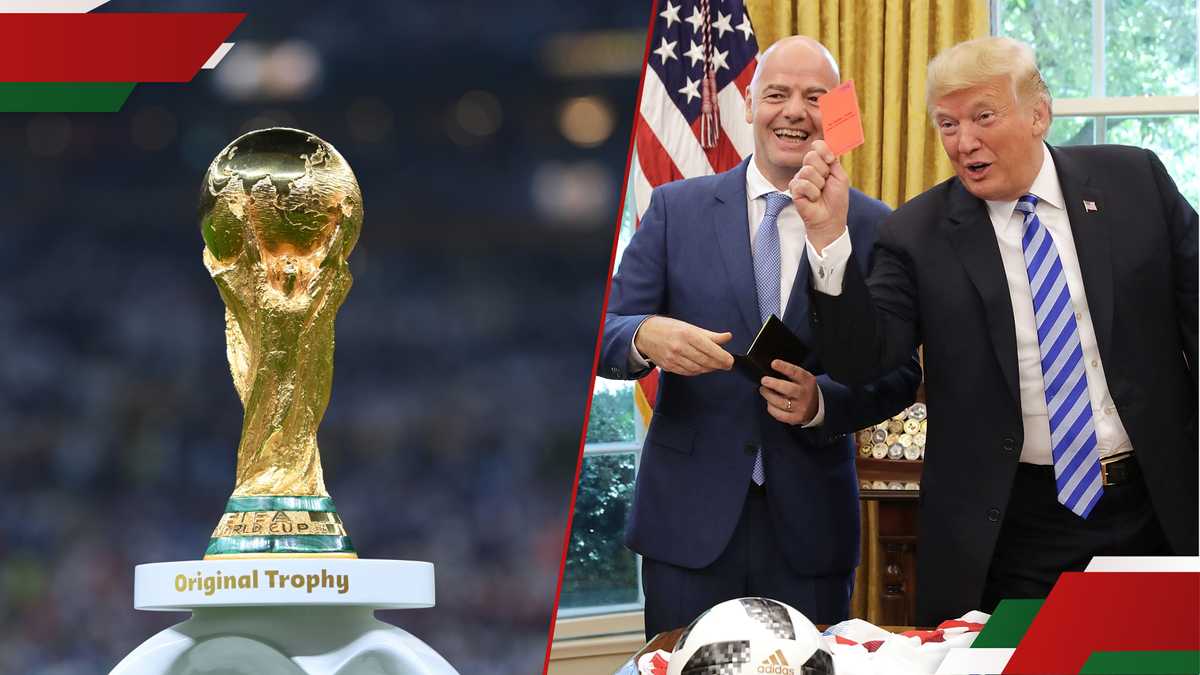
On July 19, 2026, Spain won the 2026 FIFA World Cup final against Lionel Messi's Argentina after 120 minutes at MetLife Stadium in New Jersey, United States. It was a competition that became known for many unsavory reasons.
FIFA President Gianni Infantino remarked that the competition "exceeded expectations," a statement that critics say highlights the insensitivity of his administration. The controversies started months before the first ball was kicked. First was the competition format, which expanded from the original 32 teams to 48 teams. While the expansion was originally meant to give lower-ranked regions more opportunities, it was also viewed as a format designed to increase revenue because more matches meant more viewership. While that debate was still ongoing, the United States called for the inclusion of a halftime show, a feature common in many American sporting events. All of these developments pointed to the notion among critics that the competition was becoming too financially focused.
Then came the political tensions. There were reports of America invading Venezuela and arresting its president in an operation that reportedly recorded undocumented casualties. Away from this was the internal issue of anti-immigration policies and the excessive force allegedly deployed by ICE agents, which resulted in the reported deaths of two Minnesota residents during anti-ICE protests. These events further drew attention to the internal issues surrounding the administration.
Furthermore, there was the strict travel ban affecting many African and Islamic countries. This ban further contrasted with what many consider the fundamental responsibilities of a host nation. Then came the reported bombing of Iran by America and Israel, which plunged the region into a full-blown war that resulted in numerous deaths, most notably the bombing of an elementary school that reportedly killed 61 schoolchildren. As the war continued, its devastating effects were felt globally due to the surge in oil prices, which affected the world economy.
Despite the issues surrounding America, FIFA remained hopeful that the impact would not be felt during the football tournament. However, days before the opening match, the problems began to unfold. Several fans were unable to attend the tournament to support their countries. African fans were among the most affected, as the soaring cost of tickets was compounded by strict immigration checks. Supporters from countries such as Belgium, Spain, and Uruguay reportedly received unsavory treatment at airports. However, the most controversial incident involved the Iranian team, which was forced to play in the US and then fly to Mexico on match day. The lack of recovery time put them at a clear disadvantage. Many viewed this as one of the most unsportsmanlike treatments ever given to a national team because it left them with significantly less recovery time than their opponents, making it difficult to compete on equal terms.
That was not all. Television viewers were introduced to something rarely seen in football, advertisements during water breaks. Fans inside the stadium booed whenever they were introduced. Although water breaks were initially intended to help players stay hydrated during extreme heat, they continued to be used even in air-conditioned stadiums or when temperatures did not appear to warrant them.
On the pitch, controversy was no exception. The officiating became another major talking point. The alleged revocation of an American player's red card suspension ahead of the match against Belgium, reportedly following a request from the US President, generated widespread controversy. After Egypt's match against Argentina, the Egyptian coach stated that he would not watch the remainder of the World Cup because of the officiating his team had experienced.
Sports are meant to unify people. They are usually a time when people forget their daily worries and focus on the joy of the festival. However, sports have always had their share of controversies. The 1936 Berlin Olympics were widely regarded as controversial because of their use as a vehicle for Nazi propaganda. Despite calls for a boycott, the Games still went ahead. Every host country has had its own issues. Qatar's 2022 World Cup was also controversial because of its Islamic laws, including restrictions on same-sex relationships and alcohol consumption, as well as criticism over the treatment of migrant workers involved in stadium construction.
In conclusion, the drama and controversies usually stop once the ball is kicked, but some issues continue to resurface. Iran, Belgium, Egypt, Spain, Uruguay, and many African and Muslim-majority countries will undoubtedly have one or two things to say about this tournament that have little to do with football itself.
According to FIFA President Gianni Infantino, "This will go down as the greatest human social and cultural event. We united the world... it exceeded expectations." He pointed to sold-out stadiums and impressive television ratings. However, years from now, many may look back on this tournament and remember it as a World Cup known for all the wrong reasons.