

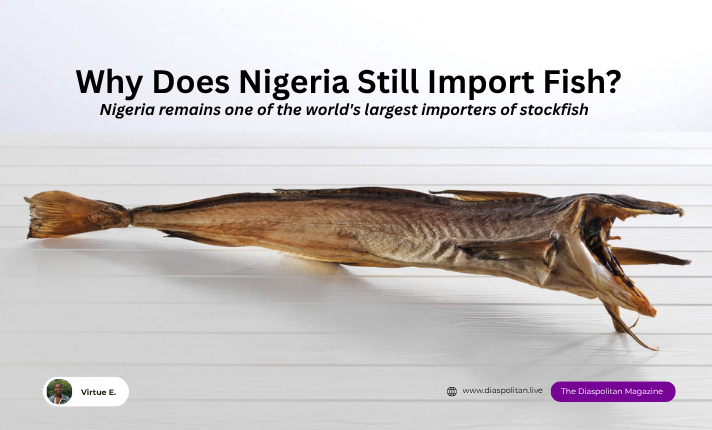
The presence of vast water bodies in Bayelsa and across Nigeria often raises a poignant question: why does the nation remain one of the world's largest importers of stockfish? The answer lies in the unique biological and environmental requirements of the fish itself. Authentic stockfish is primarily made from North Atlantic Cod (Gadus morhua), a species that thrives only in the cold, clear waters of the North Atlantic, not the tropical waters of the Gulf of Guinea.
Even if the species were available locally, Nigeria’s climate presents an insurmountable barrier to production. Stockfish is preserved through natural air-drying without the use of salt or additives. In Norway, particularly the Lofoten Islands, the drying season (February to June) provides a perfect balance of wind, sun, and stable cold temperatures that allow the fish to dry gradually. In contrast, Nigeria’s hot and humid climate would cause fresh fish to rot and decay long before the drying process could preserve it.
In Norway, the production method has remained largely unchanged for centuries. After being caught and gutted, the fish are tied in pairs and hung on massive wooden racks known as "hjell" for approximately four months. During this time, about 70% of the water evaporates, leaving the nutrients in a highly concentrated form. The fish then matures indoors for another 4 to 12 months, developing a distinct fermentation-like aroma and flavor similar to matured cheese.
This process results in a product that is exceptionally durable, which historically made it ideal for the Nigerian market. While stockfish was used as food for enslaved West Africans as early as the 19th century, its status as a dietary staple was cemented during the Biafran Civil War. Tonnes of stockfish were airlifted as relief food to combat widespread malnutrition and kwashiorkor because it provided vital protein and vitamins without the need for refrigeration.
Today, stockfish (fondly called Okporoko or Kpanla) is an essential "flavor architecture" in Nigerian cuisine. It is prized for the deep, concentrated savory depth it brings to soups like Egusi, Afang, and Bitterleaf. Beyond its "layered" taste, its chewy texture is a symbol of hospitality and prestige, often reserved for esteemed guests at celebrations.
While we cannot replicate the unique conditions required for stockfish, Nigeria has significant potential to enhance its marine economy by focusing on indigenous species such as Tilapia and Catfish. Currently, Nigeria faces a domestic fish production deficit of approximately 1.34 million metric tons. The Ministry of Marine and Blue Economy is central to bridging this gap by promoting sustainable fisheries management and aquaculture. Additionally, the ministry's role in negotiating trade policies (such as reducing import duties on cod heads) is vital for ensuring that these essential nutritional staples remain affordable for the average Nigerian household.